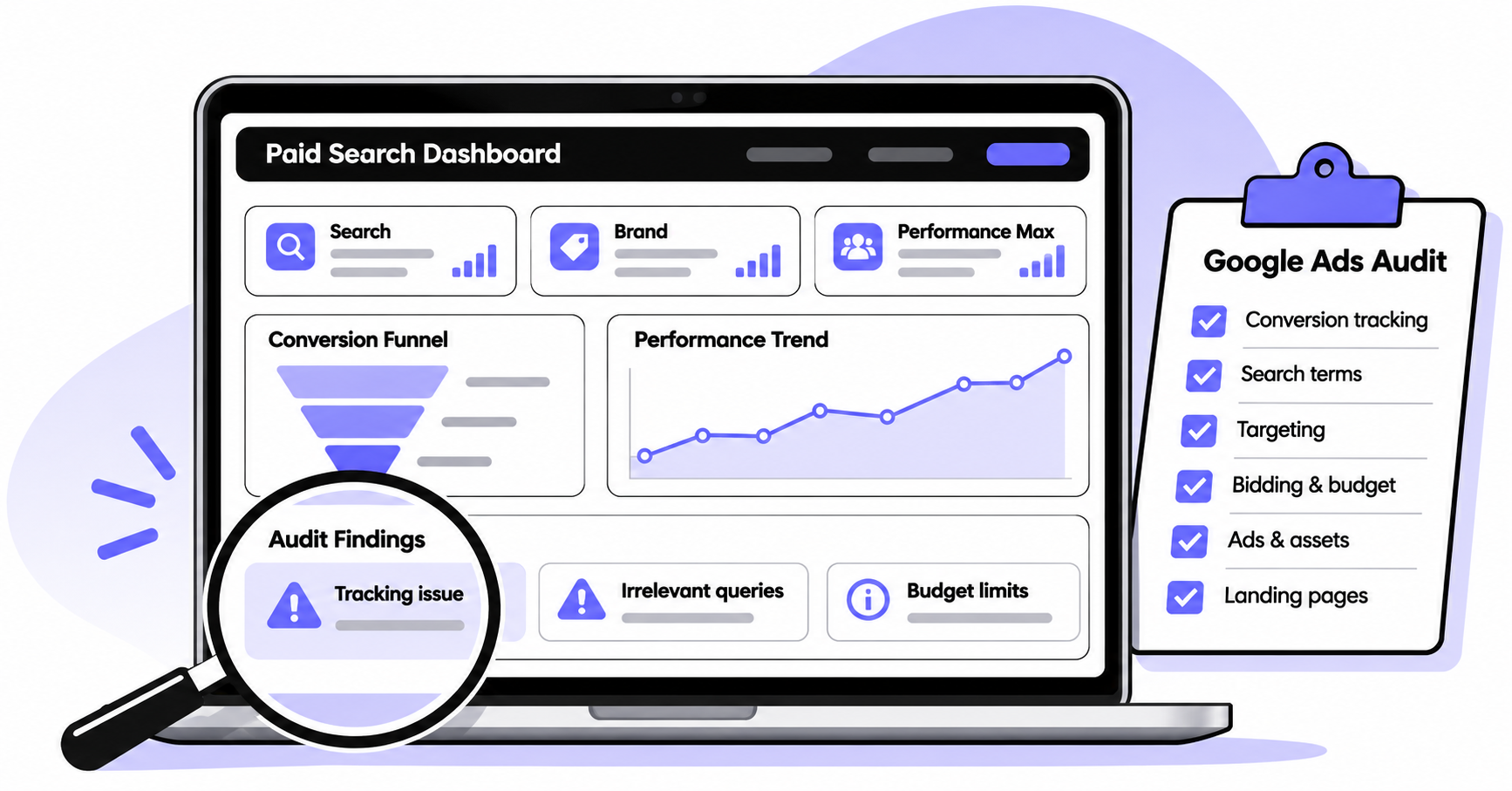



A PPC agency can spend your budget from day one. That does not mean it can turn those clicks into customers. Before signing, you need to know who manages your account, how performance is measured, and what happens if the relationship fails. These questions to ask your PPC agency will help you separate a credible plan from a polished pitch.
Key Takeaways
- Judge agencies on qualified leads, sales, and profitability, not impressions or cheaper clicks alone.
- Confirm total fees, direct account access, reporting responsibilities, and termination terms in writing.
- Ask for a realistic first-90-day plan and specific examples of how the team fixes weak campaigns.
Why the Right Questions Matter Before Hiring a PPC Agency
An impressive proposal is not the same as an operating plan. Two agencies may promise the same lead volume while using different conversion definitions, management fees, and reporting methods.
Your questions should reveal three things: whether the team understands your economics, whether you can verify its work, and whether you remain in control of your advertising assets. Bring the same checklist to every sales call so you can compare answers fairly.
Questions to Ask Your PPC Agency About Fit and Strategy
1. Have you managed accounts with a business model like ours?
Ask for an example involving a similar sales cycle, customer value, budget, or geographic market. A local home-service campaign requires different decisions from B2B software or an online store.
Strong answer: The agency explains the starting problem, changes made, time period, and business outcome. It can discuss results without exposing another client’s confidential information.
Red flag: A case study shows only impressions or a percentage increase with no baseline.
2. Who will actually manage our campaigns?
The person delivering the sales pitch may never touch your account. Ask who handles strategy, daily checks, ad copy, tracking, and escalation. Find out how many accounts that person oversees.
Strong answer: A named manager, defined responsibilities, backup coverage, and an introduction before onboarding.
Red flag: You are promised senior expertise but cannot meet the person doing the work.
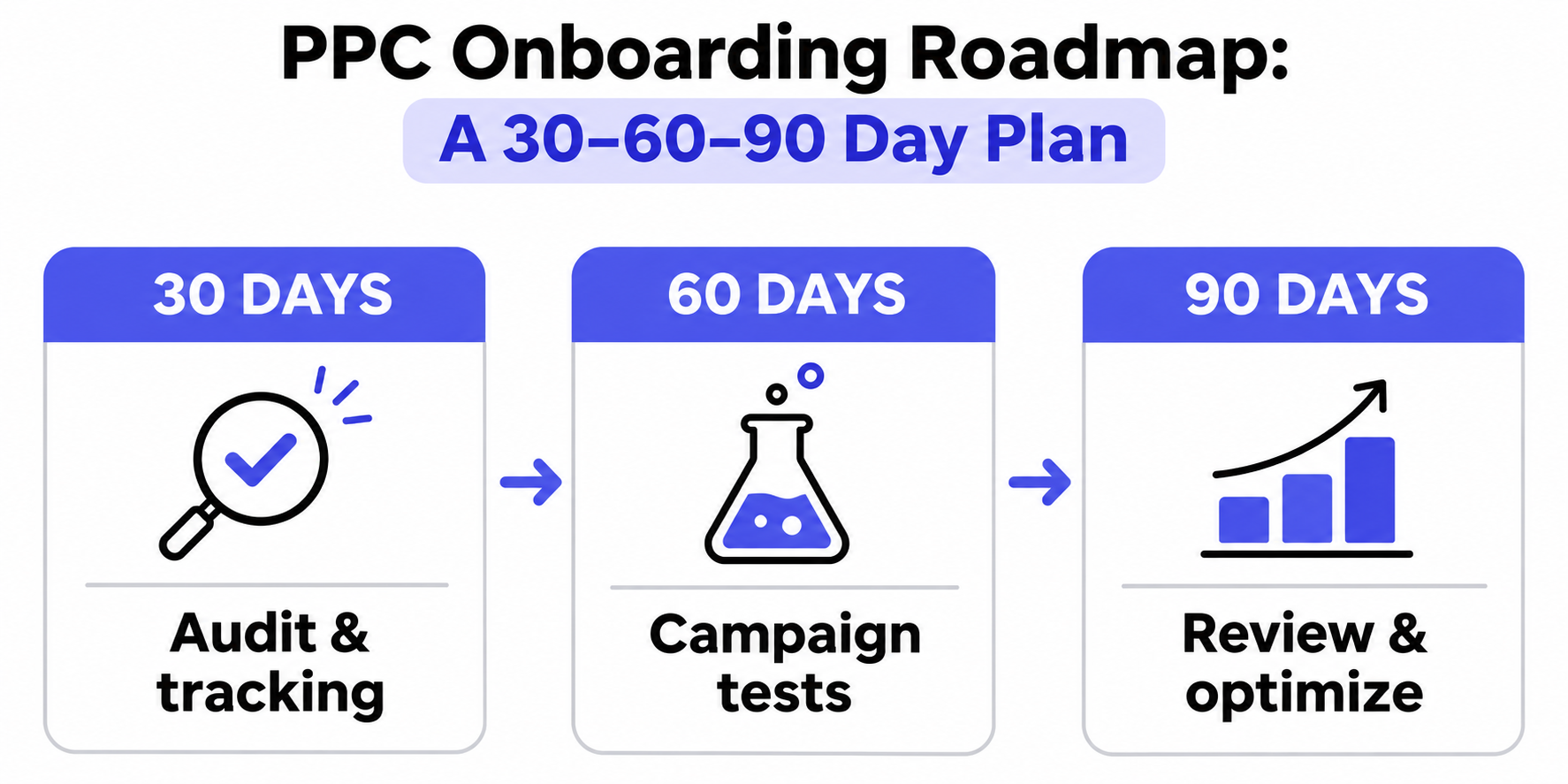
3. What will you do in the first 30, 60, and 90 days?
A reliable agency should explain the sequence, not promise instant returns. The first month may involve auditing tracking, reviewing search terms, assessing landing pages, and fixing expensive leaks.
By days 60 and 90, you should expect test results, trend analysis, and decisions based on enough data to be meaningful.
Strong answer: A milestone plan with owners, deliverables, and a review date.
Red flag: A guaranteed return before the agency has seen your account and sales process.
4. How will you decide what to advertise and where?
Ask whether the proposed mix includes Search, Shopping, Performance Max, or other channels, and why. The right choice depends on purchase intent, product feeds, available creative, and the conversions you can measure.
Strong answer: A budget allocation tied to your offer, margins, audience, and evidence. The team explains what it will test before expanding.
Red flag: Every prospect gets the same campaign setup or an automatic recommendation to increase spend.
Questions About Tracking, Results, and Reporting
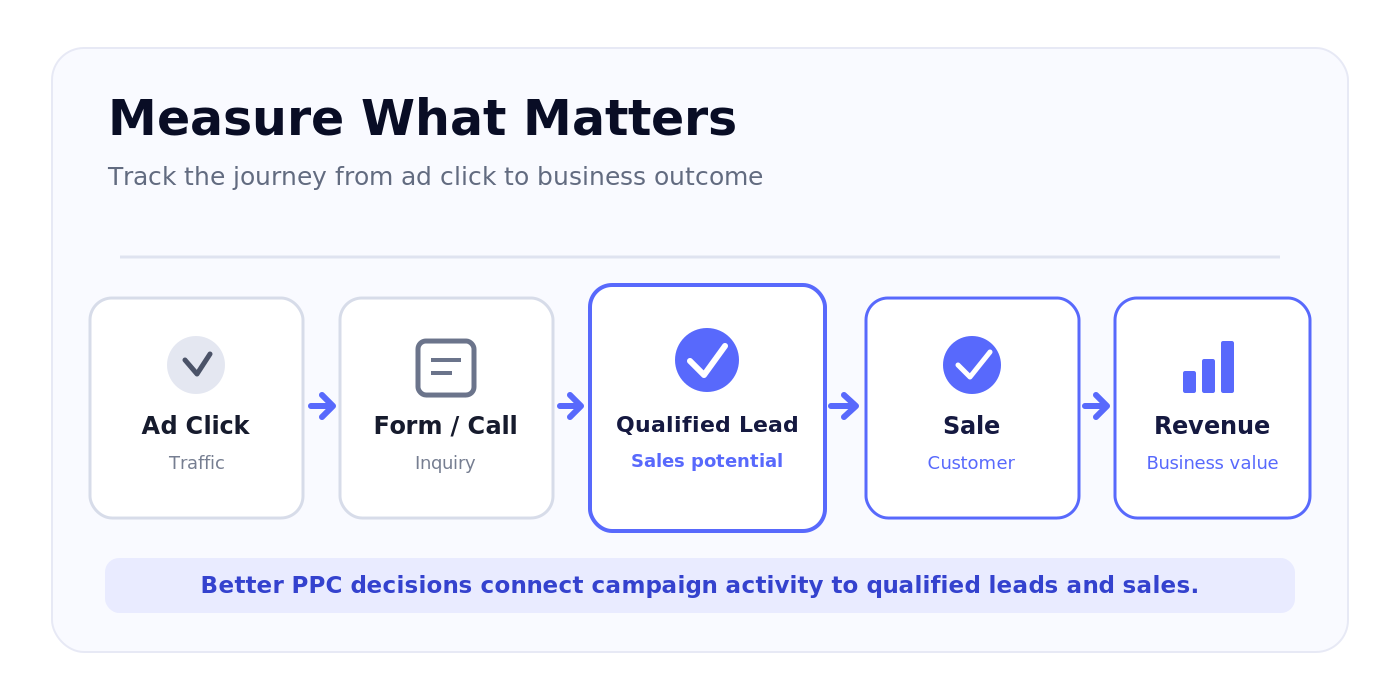
5. What counts as a conversion, and how do you judge lead quality?
A submitted form is not necessarily a qualified prospect. Ask which actions are primary conversion goals and whether your sales team can mark leads as qualified, booked, or closed.
For lead-generation accounts, Google Ads supports qualified-lead and converted-lead goals. These can help connect ad performance with outcomes beyond the first form submission.
Red flag: The agency reports every click-to-call or button tap as a valuable lead without checking quality.
6. How will you verify that conversion tracking works?
Ask how the team tests form submissions, phone calls, purchases, and deduplication. Clarify who maintains Google Tag Manager, analytics access, consent settings, and CRM integrations.
Strong answer: A tracking checklist, test conversions, and routine checks when pages or forms change. The agency can explain differences between ad-platform and analytics totals.
Red flag: Nobody can demonstrate a successful conversion or explain why numbers disagree.
7. Which PPC reporting metrics will we see every month?
Clicks and cost per click help diagnose campaigns, but they do not prove profitability. Ask for spend, conversions, cost per qualified lead or acquisition, conversion rate, and revenue or return on ad spend where measurable.
Strong answer: A sample report with trends, plain-English interpretation, completed tests, and next actions. Metrics reflect your business model, not a generic dashboard.
Red flag: A colorful report full of traffic charts but no discussion of sales outcomes.
8. What happens when campaigns miss their targets?
No agency can prevent every weak month. Ask what it checks first: search terms, tracking changes, auction competition, lead quality, landing-page friction, or budget limits.
Strong answer: A documented investigation, prioritized fixes, and an agreed review window. The agency knows when to stop spending on a failing experiment.
Red flag: Every missed target is blamed on the market or solved by asking for a larger budget.
Questions About PPC Agency Pricing, Ownership, and Contracts
9. What will we pay, including costs outside the monthly fee?
PPC agency pricing may involve a flat retainer, a percentage of ad spend, a setup fee, or a combination. Ask whether creative production, landing pages, tracking repairs, reporting tools, and additional platforms cost extra.
For example, a $4,000 monthly ad budget and a 15% management fee equals $600 in management charges, before any separate setup or production fees. Compare the complete monthly commitment, not only the headline rate.
Red flag: The proposal combines media spend and service fees without an itemized breakdown.
10. Who controls the ad account, analytics, and campaign data?
Google Ads account ownership should be settled before access is granted. Your business should retain direct administrative access and a clear record of the accounts, billing setup, tags, audiences, and creative assets it pays for.
Google explains that a linked manager account can receive administrative privileges, but the client account still owns its data and can remove the manager relationship. Read Google’s manager-account ownership guidance.
Strong answer: Written access roles and a handoff plan that leaves your business able to operate after the agency exits.
Red flag: You can only view screenshots and cannot independently access your account.
11. What automation and AI-driven changes will you allow?
Automated bidding and campaign types can be useful, but they still need meaningful conversion goals, budget limits, and human review. Ask what changes require approval and how the team checks search relevance or placements.
Strong answer: Clear rules for budget increases, automated recommendations, brand exclusions where applicable, and experiments.
Red flag: The agency treats automation as a reason it no longer needs to inspect performance.
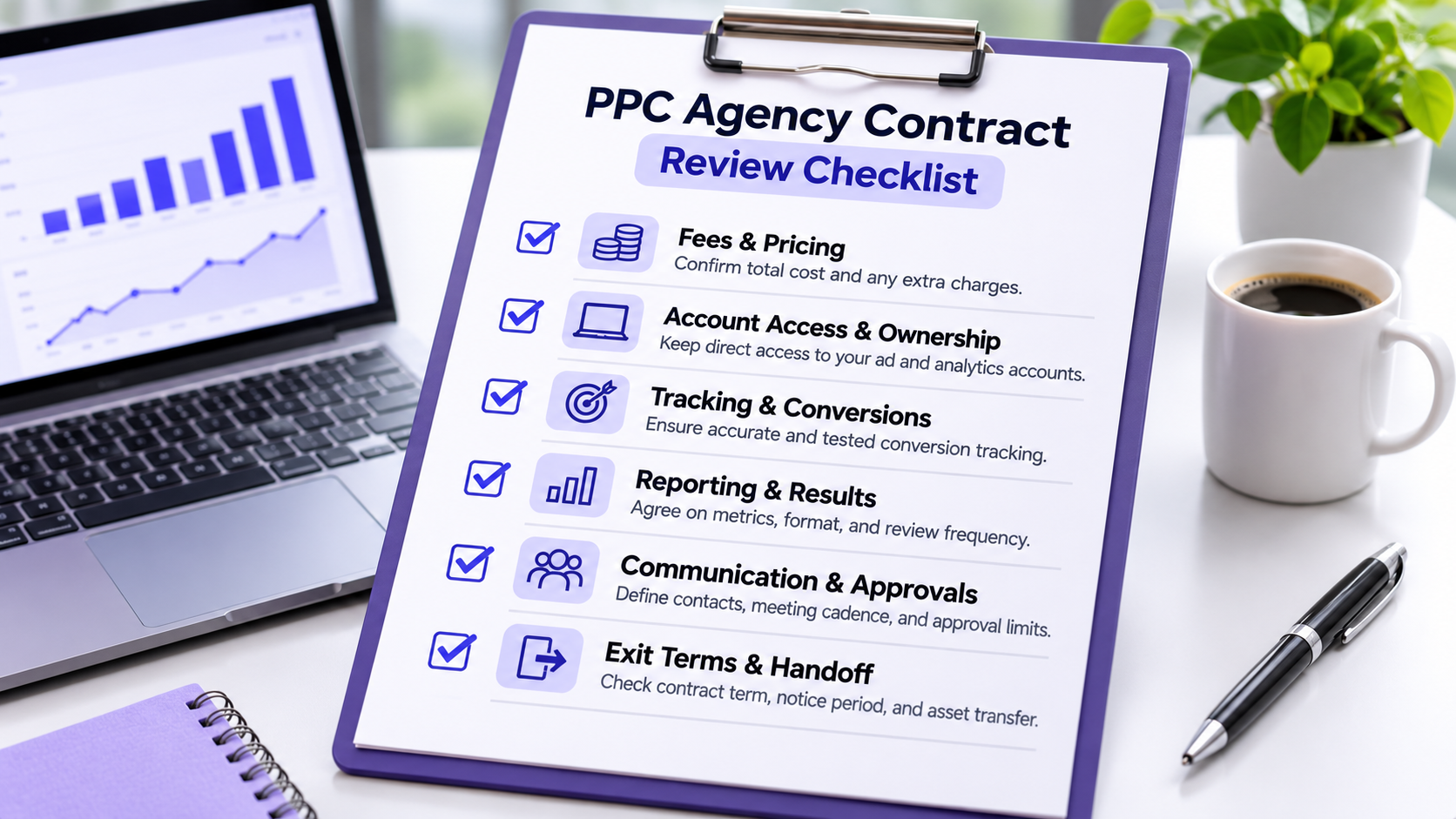
12. What exactly does the PPC agency contract say about leaving?
Before signing a PPC agency contract, check the minimum term, renewal process, notice period, early-exit fees, and what happens when campaigns are paused.
Ask whether you keep campaign history, reports, tracking configuration, creative files, and any landing pages included in the agreement. Get a specific handoff timeline, not a verbal promise.
Red flag: Automatic renewal, unclear cancellation fees, or missing asset-transfer terms.
13. How will communication and approvals work?
Find out who answers urgent questions, how often you meet, and which changes require your approval. Ask whether you can see a change log and what happens if the lead manager is unavailable.
Strong answer: A named contact, predictable reporting schedule, and documented approval thresholds for spending or major strategy shifts.
Red flag: Communication is promised as “whenever needed” without any response expectations.
Questions That Reveal Execution Quality
14. What will you test, and how will you know a test worked?
Ask for examples involving search terms, negative keywords, ad messaging, landing pages, audiences, or bidding strategies. The team should define a hypothesis and success measure before running experiments.
Strong answer: A prioritized testing backlog, a record of changes, and decisions based on volume and business impact.
Red flag: The only optimization described is changing bids or generating more ad variations.
15. Can you share a reference and an example of a campaign that struggled?
Strong teams can explain mistakes and recovery plans. Ask how they handled a tracking failure, falling lead quality, or a campaign that failed to reach its target.
Strong answer: A candid example with what was learned and how the process changed. References should be relevant and shared with the client’s permission.
Red flag: Every story is a flawless success or every setback was someone else’s fault.
Use This Scorecard to Compare Agencies
Ask each shortlisted provider the same questions. Score its answers from 0 to 2: 0 means vague or missing, 1 means partial, and 2 means specific and supported by evidence.
| Evaluation area | Evidence to request | Max points |
|---|---|---|
| Relevant experience | Comparable example and business outcome | 2 |
| Team and onboarding | Named manager and 90-day plan | 2 |
| Tracking and lead quality | Conversion definitions and test process | 2 |
| Reporting and problem-solving | Sample report and recovery example | 2 |
| Fees and ownership | Itemized quote and direct account access | 2 |
| Contract and communication | Exit terms, handoff, and approval process | 2 |
A total out of 12 makes comparison easier, but it is not a substitute for judgment. Treat missing account access or unacceptable exit terms as deal-breakers, even if an agency scores well elsewhere.
PPC Agency Red Flags You Should Not Ignore
Watch for promises of guaranteed results without supporting assumptions, reluctance to discuss lead quality, and proposals that hide ad spend inside an unexplained package.
Another warning is pressure to sign immediately. A good partner should welcome questions about tracking, performance, staffing, and contract terms. If an agency will not put key commitments in writing, consider other options.
Should You Hire an Agency or a Dedicated PPC Specialist?
An agency may suit a business needing several services, creative production, or wider channel coverage. A dedicated specialist can make sense when you already have a clear marketing owner and need hands-on campaign management without a larger agency structure.
Compare the total cost, expertise, oversight requirements, and backup coverage. Neither model automatically performs better. If you prefer a directly managed resource, explore NextHire’s Google Ads experts and assess the fit against your scope.
Frequently Asked Questions
How many questions should I ask a PPC agency before hiring it?
Start with these 15 questions, but prioritize tracking, total fees, account access, the actual manager, and exit terms. Ask follow-ups wherever an answer is vague.
Should a PPC agency guarantee leads or sales?
Be cautious with guarantees. Results depend on competition, budget, offer quality, tracking, and your sales process. Expect assumptions, benchmarks, testing plans, and accountability instead.
Is a long PPC agency contract a bad sign?
Not automatically. A longer term may support testing, but it should include clear deliverables, review points, cancellation conditions, and access to your accounts and assets.
What should I request before signing the proposal?
Ask for an itemized quote, sample report, onboarding plan, service scope, named account manager, access requirements, and written termination and handoff provisions.
Sign Only When the Answers Are Clear
The best questions to ask a PPC agency are the ones that expose how it will spend, measure, and protect your budget. You do not need perfect forecasts. You need a plan you can inspect and an agreement you can exit cleanly.
If a dedicated Google Ads professional is a better fit than an agency, talk with NextHire about the skills and coverage your business needs.