


A polished sales pitch does not tell you whether an agency can turn Google Ads spending into profitable customers. If you’re wondering how to choose a PPC agency, start with who manages your account, what they measure, and how they make decisions. This guide gives you a practical way to compare proposals before signing a contract.
Key Takeaways
- Set a business target before interviewing agencies, such as qualified leads, customer acquisition cost, or profitable sales.
- Check the actual account manager, conversion tracking plan, account access, and reporting process before evaluating the sales presentation.
- Compare the total cost and exit terms, then use a consistent scorecard to select the best fit, not automatically the biggest agency.
How to Choose a PPC Agency: Define Success Before You Search
The first step in PPC agency selection happens before the first call. Decide what you can spend, what a customer is worth, and which outcomes you need. Otherwise, every agency will define success differently.
Write a one-page brief containing your monthly ad budget, service area, products, current results, target customers, and sales cycle. State whether you need a new Google Ads account, a turnaround, or ongoing improvements.
Then work backward from customer economics. Suppose you can afford $250 to acquire a customer and one in five qualified leads becomes a customer. Your target cost per qualified lead is $50. This is an illustration, not a universal benchmark.
Ask agencies whether that target is realistic for your market and available budget. A useful answer explains the assumptions and data needed to test it. A weak answer promises results without asking about margins or closing rates.
What Should a Google Ads Agency Actually Do?
Good PPC management services extend beyond creating campaigns. Depending on your agreement, the agency should cover search intent research, campaign structure, ads, negative keywords, bidding, budget pacing, conversion tracking, testing, and performance reviews.
For ecommerce, Shopping feeds and Performance Max may be relevant. For a local service business, search campaigns, call measurement, location targeting, and lead quality may matter more. The right mix depends on the business, not the agency’s preferred package.
Ask which tasks are included, which require extra fees, and who fixes problems outside the ad account. Landing-page changes, creative production, CRM integration, and tracking repairs are common areas where responsibilities can become unclear.
Seven Checks That Separate Strong Agencies From Weak Ones
1. Relevant experience, not just impressive case studies
Request examples from businesses with similar sales cycles, advertising budgets, and customer types. A $100,000 monthly ecommerce account does not prove that an agency can profitably run a $3,000 local lead-generation account.
Ask what the starting problem was, what changed, how long it took, and whether the reported improvements reflect qualified leads or revenue. Case studies with only impressions or click-through rates leave the important questions unanswered.
2. The actual person running your campaigns
A senior strategist may lead the pitch while a different employee handles your account. Meet the day-to-day specialist and ask how many accounts they manage, how often they review yours, and who covers absences.
Request a clear communication schedule. For smaller teams, a reliable specialist who answers questions and explains trade-offs can be more valuable than a large roster of experts you never speak to.
3. Conversion tracking that reflects real sales
Do not accept “tracking is set up” as a complete answer. Ask how the agency verifies forms, booked calls, purchases, and other meaningful actions, and how it prevents duplicate conversions or low-value events from distorting bidding.
According to Google’s conversion measurement guidance, conversion measurement helps identify which campaigns drive valuable actions. Agencies should explain what each tracked conversion represents, not just report a total.
For lead generation, ask how they will compare advertising leads with CRM outcomes, such as qualified opportunities and closed deals. Better tracking gives you a basis for deciding whether more spend is justified.
4. Account ownership and a clean exit
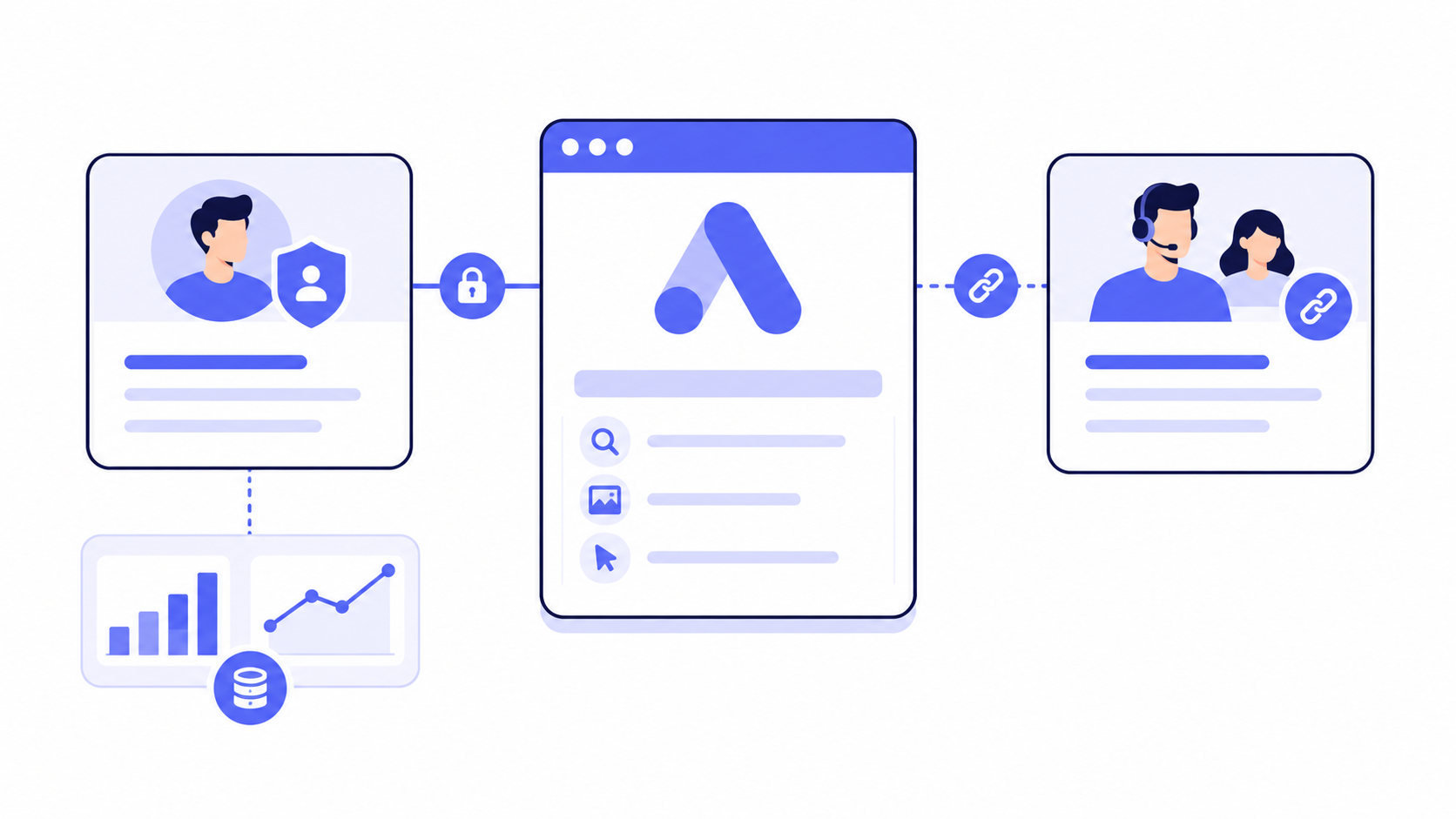
Your business should retain administrative access to its Google Ads account, analytics properties, landing pages, and relevant assets. Agencies can work through managed access without making your business dependent on their login.
Confirm who controls billing, conversion tags, audiences, and historical data. Check what happens when you leave. Google’s manager-account guidance explains that unlinking can affect shared remarketing lists and cross-account conversion tracking. Ask for a written handover plan before signing.
5. A strategy tailored to your actual budget
Ask each finalist to explain their first three priorities. A credible Google Ads agency will consider search demand, geography, competition, landing pages, historical search terms, and tracking before recommending new campaign types.
Have them describe how they use negative keywords, evaluate search queries, test ad messages, and decide when to change bidding strategies. Their plan should distinguish necessary repairs from optional experiments.
6. Reporting on decisions and outcomes
A dashboard full of impressions is not an accountability system. Ask for a sample monthly report that includes ad spend, qualified conversions, cost per qualified lead or acquisition, sales outcomes where available, and major changes made.
Reports should also explain why results moved. Did lead quality fall? Did competition increase? Did a landing page stop converting? A good agency identifies the next action and its owner instead of simply recommending a bigger budget.
7. Transparent fees, workload, and contract terms
Ask for an itemized proposal. It should separate media spend from management fees and identify setup costs, creative costs, tracking work, landing-page support, reporting, and any third-party software charges.
Review the minimum term, notice period, cancellation fees, and ownership of work produced. For performance-based fees, confirm how a qualified lead or attributed sale is defined, including disputes and refunds.
Compare PPC Agency Pricing Without Losing Sight of ROI
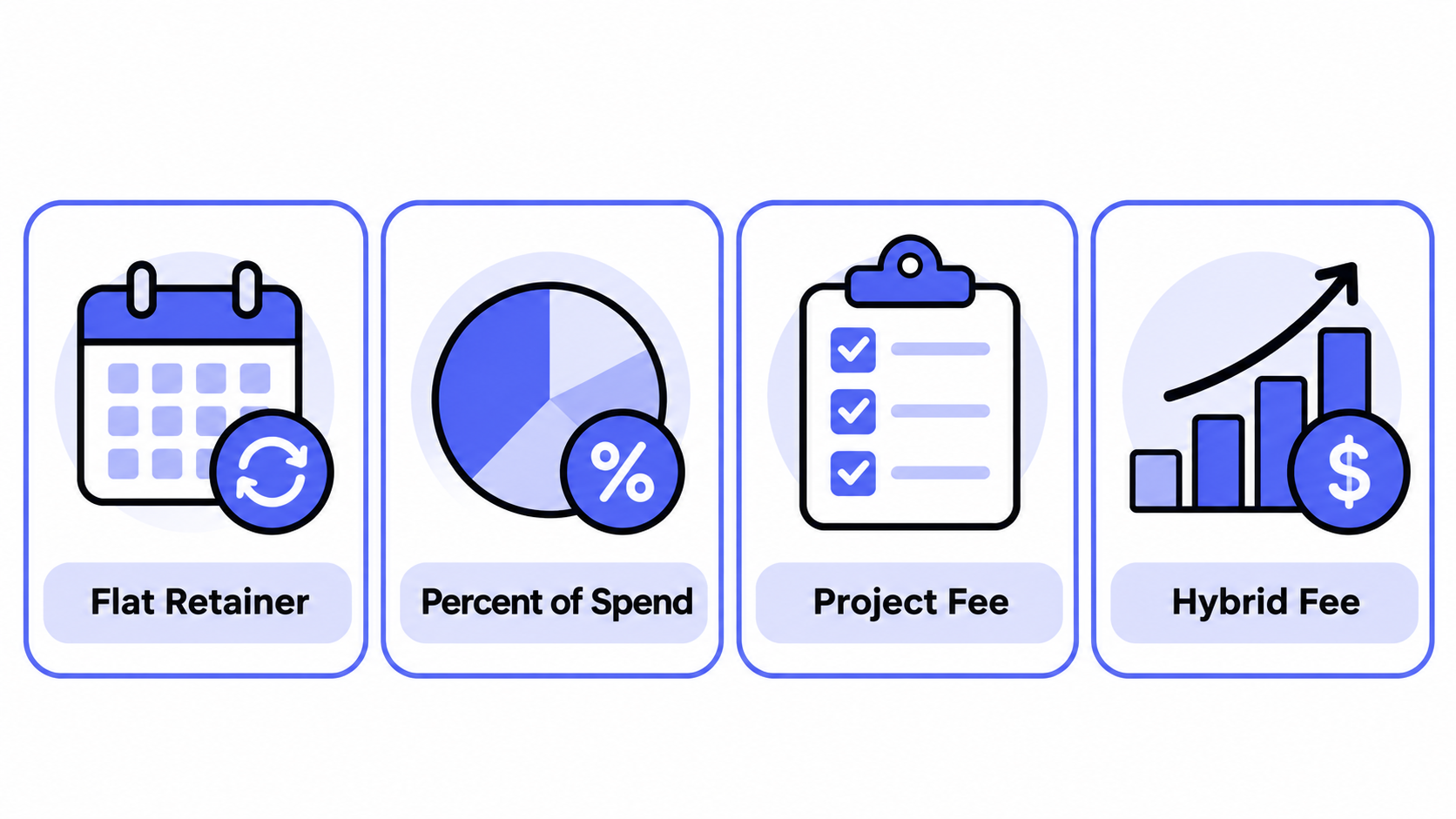
PPC agency pricing usually uses a flat retainer, a percentage of advertising spend, a project fee, or a hybrid arrangement. No model is automatically best. What matters is whether the fee buys the level of specialist attention your account needs.
| Fee model | How it works | What to verify |
| Flat retainer | Fixed recurring management fee | Hours, scope, and extra-work charges |
| Percentage of spend | Fee rises with the ad budget | Incentive to increase spend and any minimum fee |
| Project or audit | One-off charge for defined work | Deliverables, revisions, and handover |
| Hybrid or performance-based | Base fee plus results-linked payment | Attribution, qualifying rules, and fee caps |
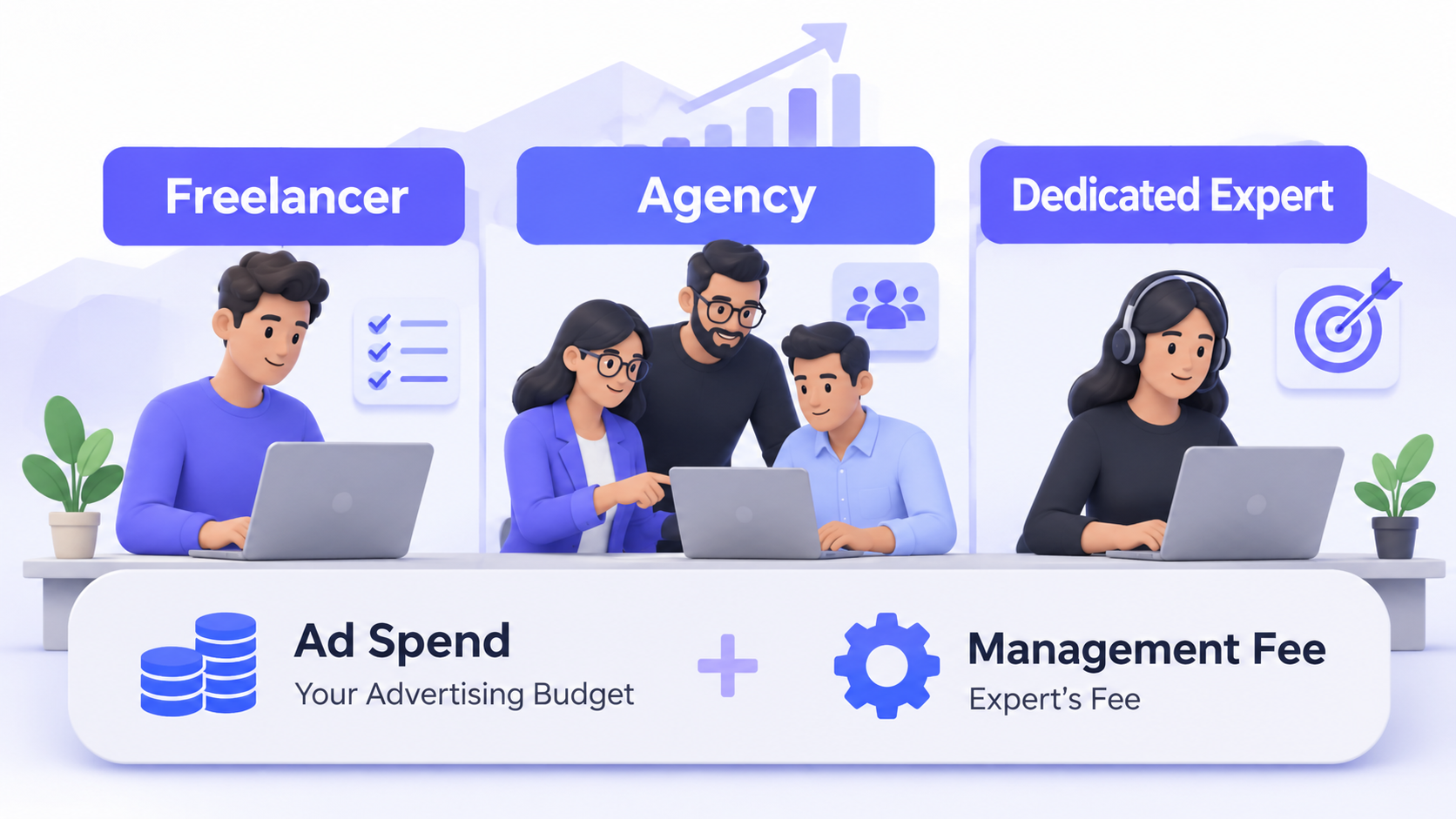
Consider a hypothetical $3,000 ad budget with a $600 management fee. Your total monthly commitment is $3,600 before any setup or creative costs. Compare that full amount with the value of customers acquired, not just the ad platform’s reported cost per lead.
PPC Agency Red Flags That Should Stop the Deal
Some warning signs justify walking away even when the proposal looks attractive:
- Guaranteed lead volume, rankings, or revenue before an account review.
- Refusal to provide appropriate access to your Google Ads account and data.
- Reporting that celebrates clicks but avoids lead quality and business outcomes.
- Unclear billing, surprise charges, or contract terms that make leaving difficult.
- A generic plan that ignores your offer, margins, location, and sales process.
- No direct contact with the specialist who will actually run the campaigns.
A Google Partner badge can be a useful credential, but it is not a guarantee of results for your company. The program considers agency performance, spend, and certifications. Check the person’s practical experience as carefully as the agency’s badge.
Questions to Ask a PPC Agency in Your Interview
Use the same questions to ask a PPC agency in every finalist call so your comparison remains fair:
- What would you audit before changing our campaigns?
- Who will manage our account each week, and can we speak to them?
- Which conversions will you track, and how will you validate lead quality?
- What would you change in the first 30 days, and why?
- How will you decide whether we should increase or reduce ad spend?
- What does the monthly fee include, and who owns the account and assets if we leave?
Request one sample report and a short written action plan. Agencies do not need to give away a full strategy for free, but they should demonstrate how they think.
A Simple PPC Agency Selection Scorecard
Score each shortlisted provider from 1 (weak) to 5 (strong) across these criteria. Weight the first two areas most heavily if measurement or ownership is currently a problem.
| Selection criterion | Weight |
| Conversion tracking and business outcomes | 25% |
| Account control and contract transparency | 20% |
| Relevant experience and realistic strategy | 20% |
| Assigned specialist and communication | 15% |
| Reporting quality and optimization process | 10% |
| Total cost relative to scope | 10% |
Multiply each score by its weight and compare totals. Do not let a strong price score cancel out an unacceptable account-ownership clause. Treat those clauses as pass-or-fail requirements.
What to Expect in the First 90 Days
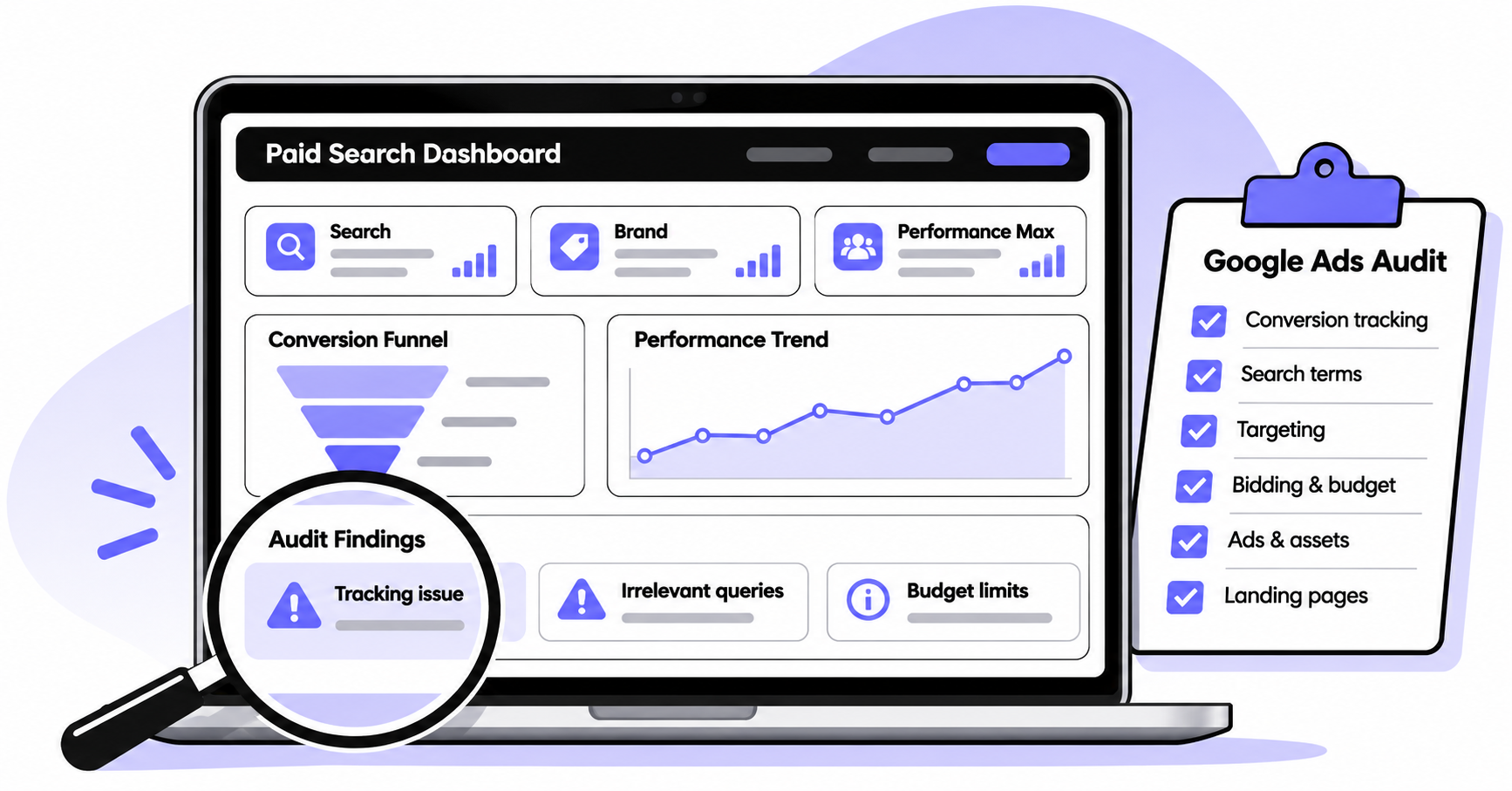
The first month should establish access, audit findings, conversion definitions, baseline performance, and a prioritized action plan. If campaigns are already performing well, there may be no reason to rebuild everything.
During days 31 to 60, expect documented tests, search-term and budget reviews, tracking checks, and an explanation of early results. The agency should distinguish normal testing costs from waste that can be prevented.
By days 61 to 90, discuss whether lead quality, acquisition cost, and pipeline results are moving toward agreed targets. Some businesses need longer because of limited conversion volume or long sales cycles. The agency should explain the evidence, not promise a fixed return date.
Agency, Freelancer, or Dedicated Google Ads Specialist?
An agency makes sense when you need a broader team handling paid search, creative, analytics, and landing pages. A freelancer may suit a narrow project or a small account, although coverage and availability depend on one person.
A dedicated specialist is another option when you already have a marketing plan but need someone accountable for ongoing campaign execution. You can define the hours, priorities, reporting requirements, and collaboration process around your own business.
NextHire helps businesses hire Google Ads experts for project, part-time, or dedicated support. This can be worth comparing with an agency retainer if direct communication and consistent ownership of weekly campaign work matter more than a full-service package.
Frequently Asked Questions
How many PPC agencies should I compare?
Start with three well-matched candidates. Give each the same brief, interview questions, and scorecard so you can compare their actual approach rather than their presentation style.
Is a Google Partner badge enough to choose an agency?
No. It shows that a company meets Google’s Partner criteria, not that it will achieve your target acquisition cost. Evaluate the assigned specialist, tracking plan, and relevant client results too.
How long should I give a PPC agency to show results?
Agree on 30-, 60-, and 90-day checkpoints. Evaluate tracking and execution early, then judge business outcomes against your sales cycle and available conversion data.
Should I give an agency admin access to Google Ads?
Grant only the level needed for agreed work while keeping your own reliable administrative access. Document billing, manager permissions, and the procedure for ending access.
Is hiring a dedicated Google Ads specialist cheaper than an agency?
It can be, but not always. Compare total cost, expected hours, creative and tracking support, management overhead, and what happens when the assigned person is unavailable.
Choose the Team That Can Explain Where Your Ad Budget Goes
The best answer to how to choose a PPC agency is simple: demand a clear plan, ownership of your data, accountable people, and measurements tied to customers. Use the scorecard, verify the contract, and choose the model that fits your workload.
If you need hands-on Google Ads capacity without a full agency arrangement, talk with NextHire about your requirements.