



In today’s digital-first world, a mobile app isn’t just a convenience; it’s often the primary interface between your business and its customers. From banking to shopping, personal data to critical transactions, our phones handle it all. But with great convenience comes great responsibility – especially when it comes to security. Ignoring mobile app security testing before launch is like leaving your front door wide open in a busy city. It’s not a matter of if a breach will happen, but when.
At Next Hire Inc., we understand the stakes. We’ve seen firsthand how quickly a security vulnerability can erode user trust, incur hefty fines, and damage a brand’s reputation. That’s why we believe every business needs a robust strategy for mobile application security testing long before their app hits the app stores. This isn’t just about finding bugs; it’s about building a resilient, trustworthy product that protects your users and your bottom line.
This comprehensive guide will walk you through why mobile application security testing is non-negotiable, the key areas to focus on, essential tools, and how specialized expertise, like that offered by Next Hire Inc., can make all the difference.
What Is Mobile App Security Testing?
Mobile App Security Testing (MAST) is the systematic process of identifying vulnerabilities in mobile applications – across both iOS and Android platforms – before malicious actors can exploit them. Think of it as a thorough health check for your app, but instead of looking for physical ailments, you’re hunting for weak authentication, data leaks, insecure APIs, and hidden backdoors that could compromise sensitive information.
MAST goes beyond typical quality assurance. It involves a deep dive into the app’s code, its interactions with backend systems, and its behavior in various environments to uncover potential weaknesses. This proactive approach helps safeguard user data, maintain regulatory compliance, and protect your brand’s integrity.
Why Mobile Application Security Testing Matters Before Launch
The consequences of a mobile app security breach can be devastating. Beyond the immediate financial costs, businesses face severe reputational damage, loss of customer trust, and potential legal repercussions. The average cost of a data breach continues to be a significant concern for businesses worldwide. According to the IBM Cost of a Data Breach Report, the global average cost of a data breach was $4.44 million in 2025 .
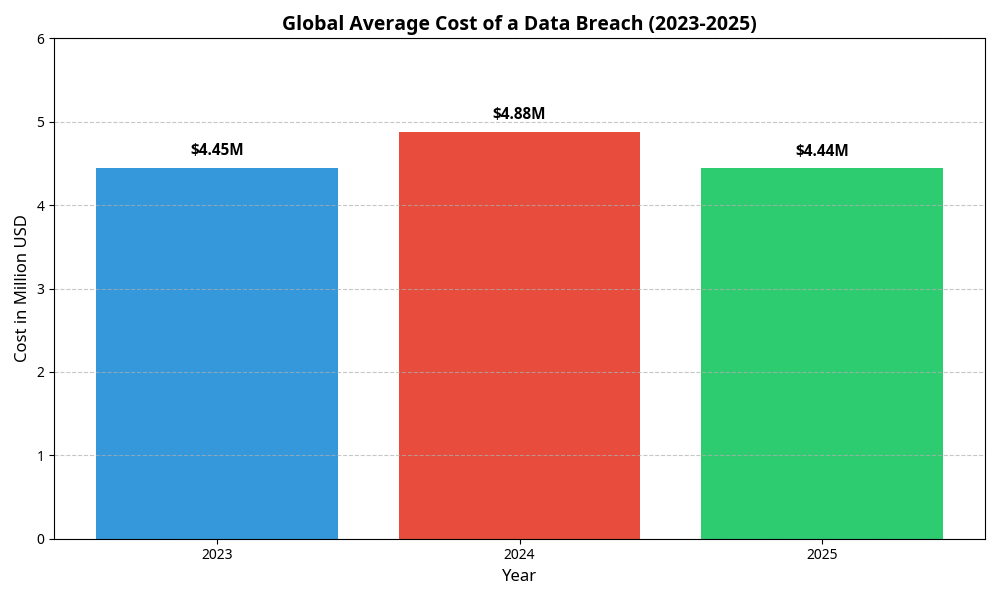
These figures highlight the critical importance of investing in robust security measures from the outset. Early detection and remediation of vulnerabilities through security testing for mobile application development can prevent these costly incidents, saving your business millions and preserving its hard-earned reputation.
Mobile App Security Testing Checklist for Businesses
Before your mobile app goes live, a thorough mobile app security audit is essential. Here’s a checklist of critical areas every business should address:
- Secure Code Review: Analyze the app’s source code for common vulnerabilities like insecure coding practices, hardcoded credentials, and improper error handling.
- Authentication & Authorization: Implement strong authentication mechanisms (e.g., multi-factor authentication) and ensure proper authorization controls to prevent unauthorized access to features or data.
- Data Storage & Encryption: Verify that all sensitive data stored on the device or transmitted to backend servers is adequately encrypted. Avoid storing sensitive information in insecure locations.
- API Security: Test all APIs the mobile app interacts with for vulnerabilities such as injection flaws, broken object-level authorization (BOLA), and excessive data exposure.
- Session Management: Ensure secure session handling, including proper session token generation, invalidation, and protection against session hijacking.
- Input Validation: Validate all user inputs to prevent injection attacks (e.g., SQL injection, XSS) and other forms of malicious data entry.
- Error Handling & Logging: Implement secure error handling that doesn’t leak sensitive information and ensure logging mechanisms are secure and don’t expose private data.
- Third-Party Libraries & SDKs: Regularly audit and update all third-party components for known vulnerabilities. Supply chain security is crucial.
- Platform-Specific Security: Address security considerations unique to iOS and Android platforms, such as proper use of platform security features and permissions.
- Tampering & Reverse Engineering Protection: Implement measures to detect and prevent app tampering, code obfuscation, and anti-reverse engineering techniques.
Mobile Application Penetration Testing: What It Checks
While automated scans are valuable for identifying common vulnerabilities, mobile application penetration testing takes security to the next level. This involves simulating real-world attacks by ethical hackers to uncover complex vulnerabilities that automated tools might miss. A skilled mobile app penetration testing expert will attempt to exploit weaknesses in your app’s logic, configuration, and interactions with other systems.
Key areas covered in penetration testing include:
- Runtime Analysis: Observing the app’s behavior in a live environment to identify vulnerabilities related to memory handling, user sessions, and data in transit.
- API Exploitation: Actively trying to bypass or manipulate APIs to gain unauthorized access or extract sensitive data.
- Client-Side Attacks: Testing for vulnerabilities that can be exploited directly on the user’s device, such as insecure data storage or improper use of local resources.
- Server-Side Vulnerabilities: Assessing the backend infrastructure that supports the mobile app for weaknesses that could be leveraged for attacks.
- Business Logic Flaws: Identifying flaws in the application’s design or implementation that could lead to unauthorized actions or data manipulation.
Common Security Risks in Mobile Apps
The OWASP Mobile Top 10 provides a comprehensive list of the most critical security risks in mobile applications. Understanding these helps businesses prioritize their mobile application security testing efforts. The latest version, OWASP Mobile Top 10 2024, highlights key vulnerabilities :
| # | Vulnerability | Description |
| M1 | Improper Credential Usage | Weak password policies, hardcoded credentials, or insecure storage of authentication tokens. |
| M2 | Inadequate Supply Chain Security | Vulnerabilities introduced through third-party libraries, SDKs, or open-source components. |
| M3 | Insecure Authentication/Authorization | Flaws in user authentication and authorization mechanisms, allowing bypass or privilege escalation. |
| M4 | Insufficient Input/Output Validation | Lack of proper validation for user inputs and outputs, leading to injection attacks or data manipulation. |
| M5 | Insecure Communication | Data transmitted over insecure channels or without proper encryption, making it vulnerable to interception. |
| M6 | Inadequate Privacy Controls | Unnecessary collection, storage, or logging of sensitive user data without proper consent or protection. |
| M7 | Insufficient Binary Protections | Lack of code obfuscation, anti-tampering, or anti-reverse engineering measures, making the app susceptible to analysis and modification. |
| M8 | Security Misconfiguration | Default configurations, unnecessary features, or overly permissive settings that expose the app to risks. |
| M9 | Insecure Data Storage (Cloud/Server-Side) | Misconfigured cloud storage, databases, or backend services leading to data exposure. |
| M10 | Code Tampering | The ability for attackers to modify the app’s binary to create malicious versions or bypass security controls. |
Mobile App Security Testing Tools and Methods
To effectively conduct mobile application security testing, a combination of tools and methodologies is often employed. These range from automated scanners to manual penetration testing techniques.
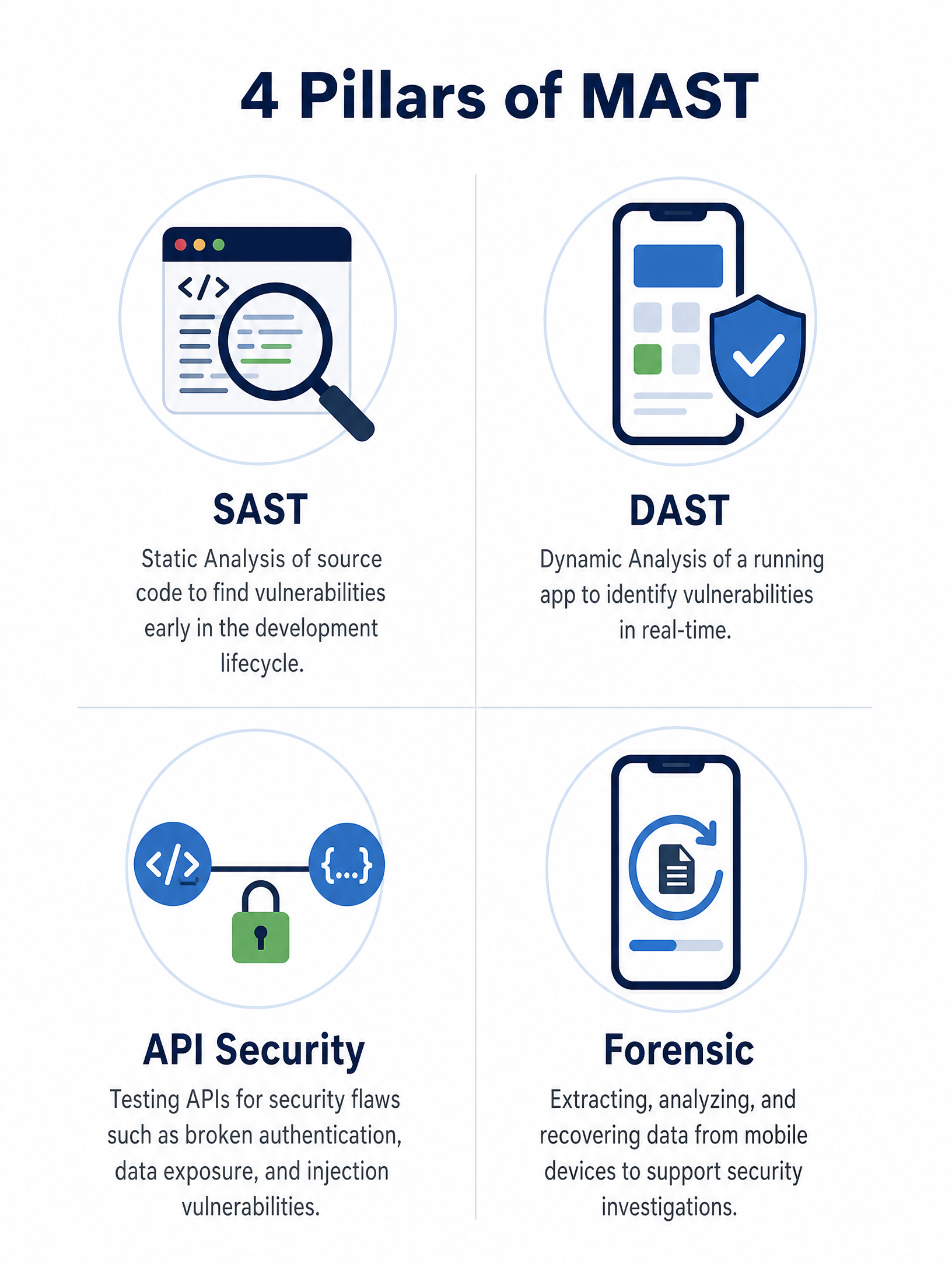
The Four Pillars of MAST
- Static Application Security Testing (SAST): Analyzes source code or compiled binaries without executing them. SAST tools identify vulnerabilities like hardcoded API keys, insecure cryptography, and overly permissive code logic early in the development cycle.
- Dynamic Application Security Testing (DAST): Tests the app in a running state to observe real-time behavior. DAST is crucial for identifying vulnerabilities related to authentication flows, session management, API calls, and network interception.
- API Security Testing: Focuses on the security of the APIs your app communicates with. This ensures the handshake between your mobile client and backend servers is authenticated, encrypted, and not susceptible to injection or data exposure.
- Forensic / Device Analysis: Ensures the app doesn’t leave sensitive
“digital crumbs” on the device, such as unencrypted cache files, logs containing PII, or tokens stored insecurely.
Top Mobile App Security Testing Tools
Here is a comparison of some of the top mobile app security testing tools available:
| Tool | Type | Key Strengths | Best For | Pricing Model |
| MobSF (Mobile Security Framework) | SAST/DAST | Open-source, flexible, deep mobile reverse-engineering. | Rapid automated audits, CI/CD integration. | Open Source |
| Frida | Dynamic Instrumentation | Deep runtime analysis, highly customizable, hooking. | SSL pinning bypass, runtime analysis. | Open Source |
| Burp Suite | Proxy-based Runtime/Manual Pentesting | Manual pentesting, API fuzzing, large plugin ecosystem. | Intercepting traffic, session inspection. | Commercial (Free Community Edition available) |
| OWASP ZAP | DAST (API, Traffic) | Fully open-source, proxy-based scanning. | Runtime scanning of HTTP/S traffic, API fuzzing. | Open Source |
| Appknox | SAST/DAST/VA | AI-augmented mobile security, deep CI/CD integration. | Automated static/dynamic tests, API testing. | Commercial |
| NowSecure | Mobile Security Platform | Enterprise-focused, automation, mobile-specific risk detection. | Runtime analysis, API scan, binary scanning. | Commercial |
Android Mobile Application Security Testing
While the core principles of security testing apply to both platforms, Android mobile application security testing requires specific attention to its unique architecture. Android’s open nature and diverse ecosystem present distinct challenges.
Key areas to focus on for Android include:
- Intents and Inter-Process Communication (IPC): Android apps often communicate with each other using Intents. Improperly secured Intents can be intercepted or manipulated by malicious apps.
- Data Storage: Android offers various storage options (SharedPreferences, SQLite, external storage). Ensuring sensitive data is encrypted and stored securely is critical.
- Permissions: Reviewing and minimizing the permissions requested by the app to adhere to the principle of least privilege.
- Reverse Engineering: Android apps (APKs) are relatively easy to decompile. Implementing robust code obfuscation and anti-tampering measures is essential.
Mobile Application Security Testing Methodology
A structured mobile application security testing methodology ensures comprehensive coverage and consistent results. A typical methodology involves:
- Information Gathering & Threat Modeling: Understanding the app’s architecture, data flows, and potential threats to identify high-risk areas.
- Static Analysis (SAST): Scanning the source code or binaries for vulnerabilities early in the development lifecycle.
- Dynamic Analysis (DAST): Testing the running application to identify runtime vulnerabilities and logic flaws.
- Penetration Testing: Simulating real-world attacks to uncover complex vulnerabilities and validate the effectiveness of security controls.
- Reporting & Remediation: Documenting findings, prioritizing risks, and providing actionable recommendations for remediation.
- Re-testing: Verifying that identified vulnerabilities have been effectively addressed.
When Should You Use Mobile App Penetration Testing Services?
While automated tools are valuable, they have limitations. They often struggle to identify complex business logic flaws or vulnerabilities that require contextual understanding. This is where professional mobile app penetration testing services become indispensable.
You should consider engaging a mobile application penetration testing service when:
- Your app handles highly sensitive data (e.g., financial, healthcare, personal information).
- You need to comply with strict regulatory requirements (e.g., PCI DSS, HIPAA, GDPR).
- You are launching a major new feature or undergoing a significant architectural change.
- You want an independent, expert assessment of your app’s security posture.
- You need to validate the effectiveness of your internal security testing efforts.

How Next Hire Inc Helps With Mobile App Security Testing
Building a secure mobile app requires specialized expertise that many organizations lack internally. That’s where Next Hire Inc. comes in. We provide access to top-tier, in-house trained professionals who can seamlessly integrate with your team and elevate your security posture.
When you hire security test engineers from Next Hire Inc., you gain:
- Expertise on Demand: Access to specialists who master the OWASP Top 10 and industry-standard security frameworks.
- Comprehensive Coverage: From vulnerability assessments to deep penetration testing, our engineers cover all aspects of mobile application security testing services.
- Flexible Engagement: Whether you need hourly support, a dedicated part-time resource, or full-time augmentation, our flexible pricing models (starting at just $5/hour) fit your budget and project needs.
- Real-World Testing: Our engineers utilize industry-leading tools and methodologies to simulate real-world attacks, ensuring your app is resilient against actual threats.
- Actionable Insights: We don’t just find problems; we provide clear, actionable remediation guidance to help your development team fix vulnerabilities quickly and effectively.
Don’t leave your mobile app’s security to chance. Partner with Next Hire Inc. to ensure your application is robust, compliant, and ready for launch. Contact us today to discuss your security testing needs and discover how our expert remote talent can protect your business and your users.
Frequently Asked Questions (FAQ )
Why should I hire security test engineers for my application?
Hiring specialized security test engineers ensures that your application is evaluated by experts who understand the latest threat landscape. Unlike general QA testers, security engineers focus specifically on identifying vulnerabilities that could lead to data breaches, ensuring your app is resilient against real-world attacks.
What is the difference between vulnerability assessment and penetration testing?
A vulnerability assessment is a systematic review of security weaknesses in an information system. It identifies and ranks vulnerabilities. Penetration testing, on the other hand, is a simulated cyberattack against your system to check for exploitable vulnerabilities. While assessments find the gaps, penetration testing attempts to walk through them.
Can remote security test engineers work effectively on security projects?
Yes, remote security test engineers can be highly effective. With modern collaboration tools and secure remote access, they can conduct thorough testing, share findings in real-time, and provide remediation guidance just as effectively as an on-site team, often at a lower cost.
How often should I hire security testing engineers?
Security testing should be an ongoing process. We recommend a full security audit before any major launch and regular penetration testing at least once or twice a year, or whenever significant updates are made to the application’s code or architecture.
What makes application security testers different from regular QA testers?
Regular QA testers focus on functionality – ensuring the app works as intended for the user. Application security testers focus on the “unintended” – how a malicious actor might misuse the app to gain unauthorized access or steal data. They require a deep understanding of security frameworks, exploit techniques, and defensive strategies.
What do security testing services include?
Comprehensive security testing services typically include threat modeling, static and dynamic analysis, API security testing, penetration testing, compliance auditing, and detailed reporting with remediation guidance to help your team fix identified issues.