

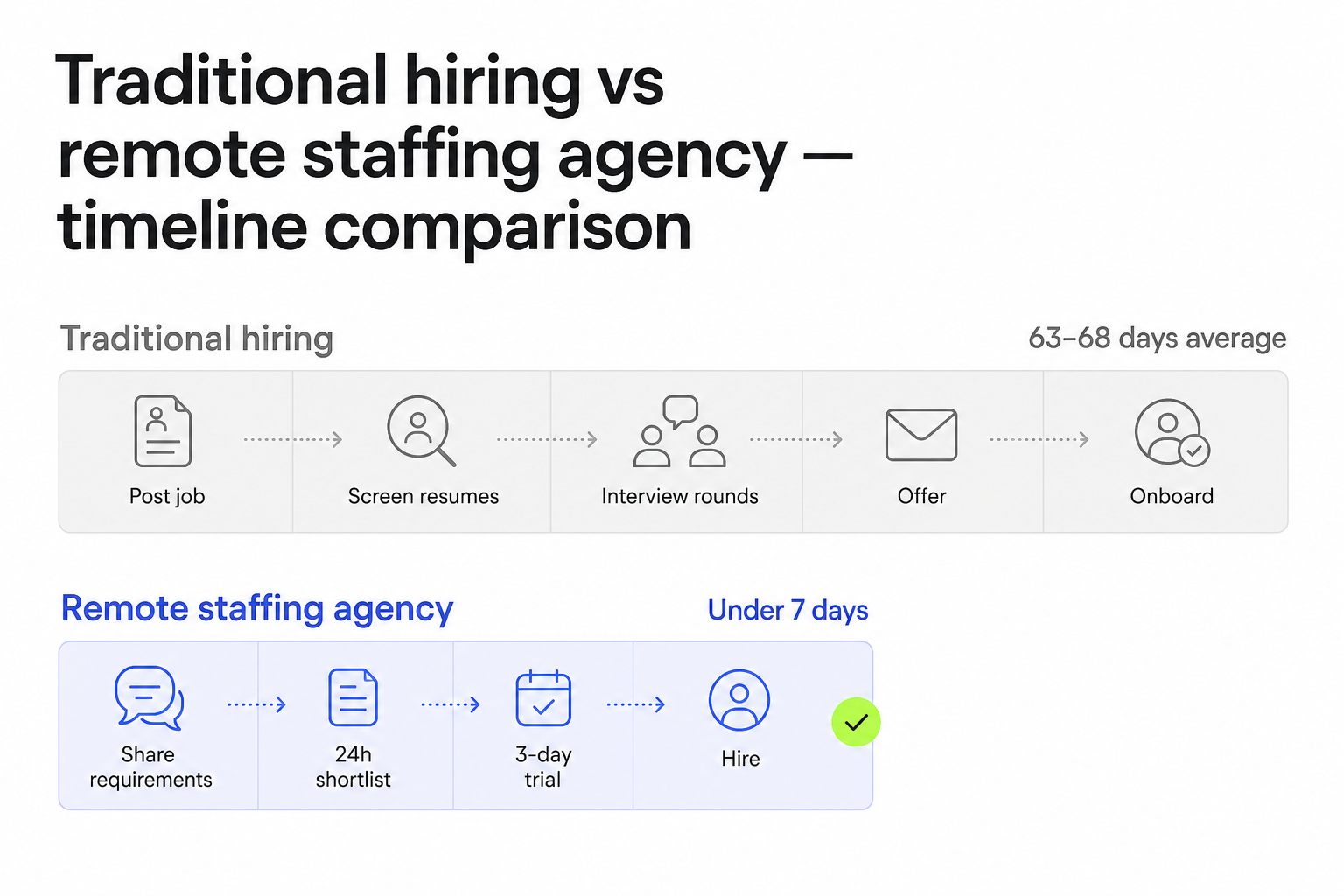
The average company takes 63–68 days to fill a role in 2026 – nearly double what it was three years ago. A remote work staffing agency collapses that timeline to 24–48 hours by doing the sourcing, screening, and matching for you. You get a pre-vetted professional, a 3-day trial to evaluate fit, and a free replacement if it doesn’t work out. Costs run from $5/hour or $799/month – often 70% less than local hiring. If your team has an open seat that’s been open too long, a remote staffing agency is almost always the fastest path to filling it.
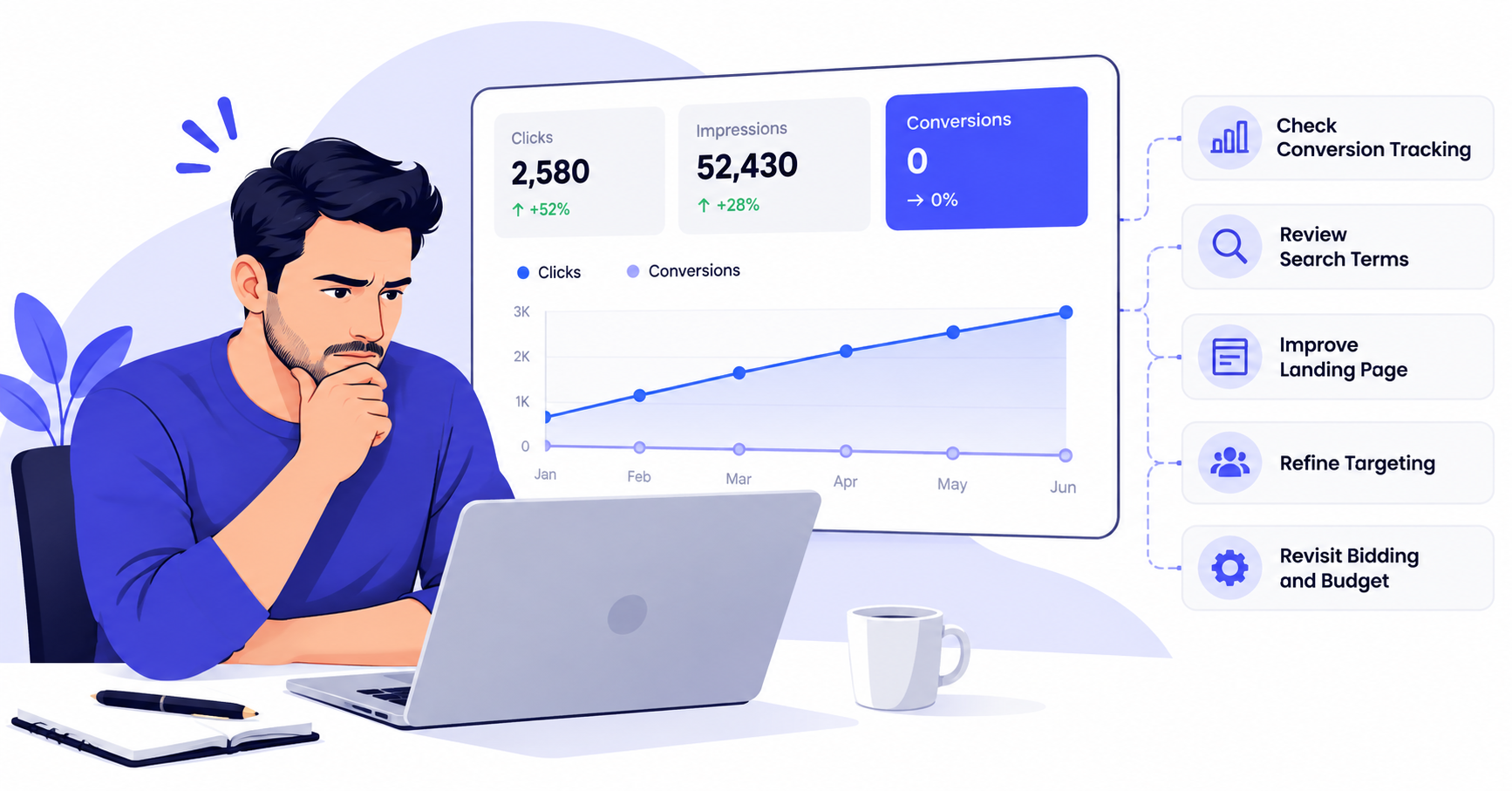
Hiring has gotten genuinely painful. It’s not just that it takes a long time – it’s that the time keeps growing. National benchmarks from early 2026 put the average time to fill a position at 63 to 68 days. Three years ago that number was 36 to 44 days. Technical roles are worse: candidates now sit through an average of 23.3 hours of interviews before an offer lands. That’s before you factor in the cost of the vacancy itself.
For a lot of companies, the traditional approach – post the job, sort through resumes, run rounds of interviews, make an offer, wait out the notice period, then actually onboard – simply doesn’t fit the pace they need to move at.
That’s where a remote work staffing agency comes in. Not as a last resort or a compromise, but as a genuinely faster, often cheaper, way to get skilled people working on your business.
What a remote work staffing agency actually does
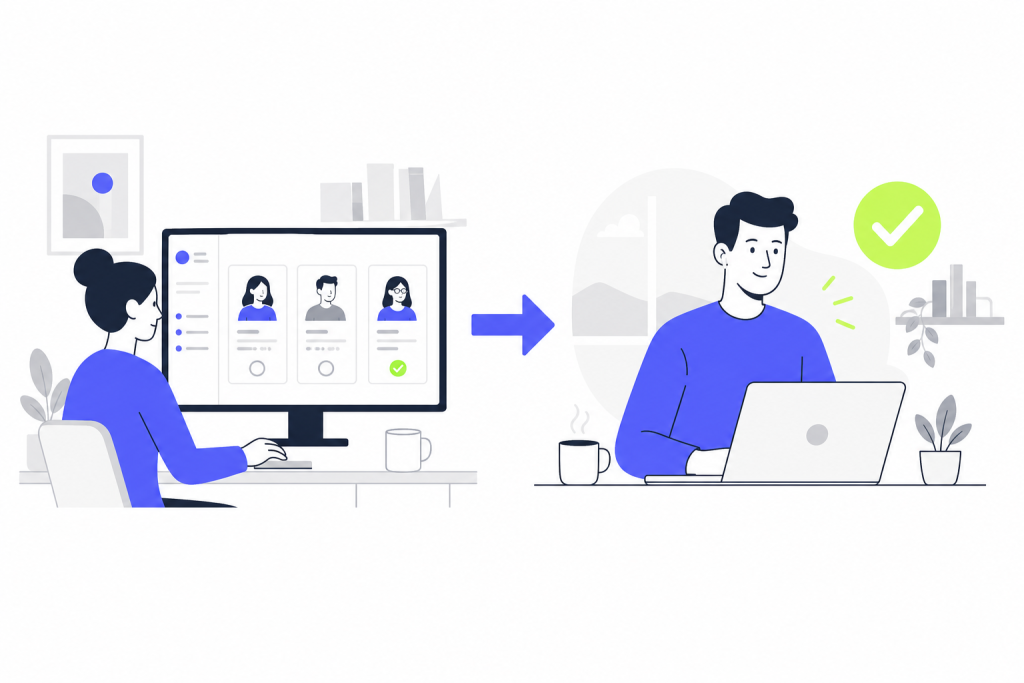
At its simplest, a remote staffing agency maintains a pool of pre-vetted, skilled professionals and matches them to businesses that have open roles. You describe what you need, they shortlist candidates, you pick one, and you start working.
That description undersells what the better agencies actually offer. The real value is the infrastructure they’ve already built: the recruiting funnel, the vetting process, the onboarding support, the account management, and the backup talent sitting ready if your first match doesn’t stick. When you hire through one of these agencies, you’re not just buying access to a resume database – you’re outsourcing the entire hiring operation.
The difference between a staffing agency and a freelance marketplace is accountability. On a platform like Upwork or Toptal, you’re ultimately on your own once a contract starts. A staffing agency stays in the picture, managing quality, communication, and performance on your behalf.
This is particularly valuable when hiring across borders. Managing compliance, time-zone logistics, payment in foreign currencies, and day-to-day communication across cultures takes real infrastructure. A good remote staffing agency has already built that.
## Why traditional hiring is taking longer
Before getting into how agencies solve this, it’s worth understanding why the problem is getting worse.
The 63–68 day average time-to-hire in 2026 isn’t just a number to benchmark against – it represents months of lost productivity, delayed projects, and compounding workload on whoever is covering for the empty seat. According to analysis from SHRM Human Capital Benchmarking and LinkedIn Talent Solutions, there are a few forces driving this:
- More specialized roles. As organizations lean into digital operations, the roles they’re hiring for require narrower, harder-to-screen skill sets. A “marketing manager” in 2019 is a very different hire than a “performance marketing manager with GA4 and CRO experience” in 2026.
- Longer interview processes. Technical candidates now spend an average of 23.3 hours in interviews before receiving an offer, according to the Ashby Talent Trends Report (Q1 2026). That number was significantly lower three years ago.
- More competition for the same candidates. With remote work now mainstream, a candidate in Austin or Melbourne is fielding offers from companies across multiple continents. The candidate market is more competitive even as the talent pool has technically expanded.
None of this is going to reverse quickly. The smart response is to change how you’re hiring, not just how hard you’re trying.
How much faster is a remote work staffing agency?
Industry data from arc.dev suggests that companies using remote staffing agencies reduce hiring time by 40–60% compared to traditional recruiting. That’s not a marketing claim – it’s the structural consequence of how these agencies operate.
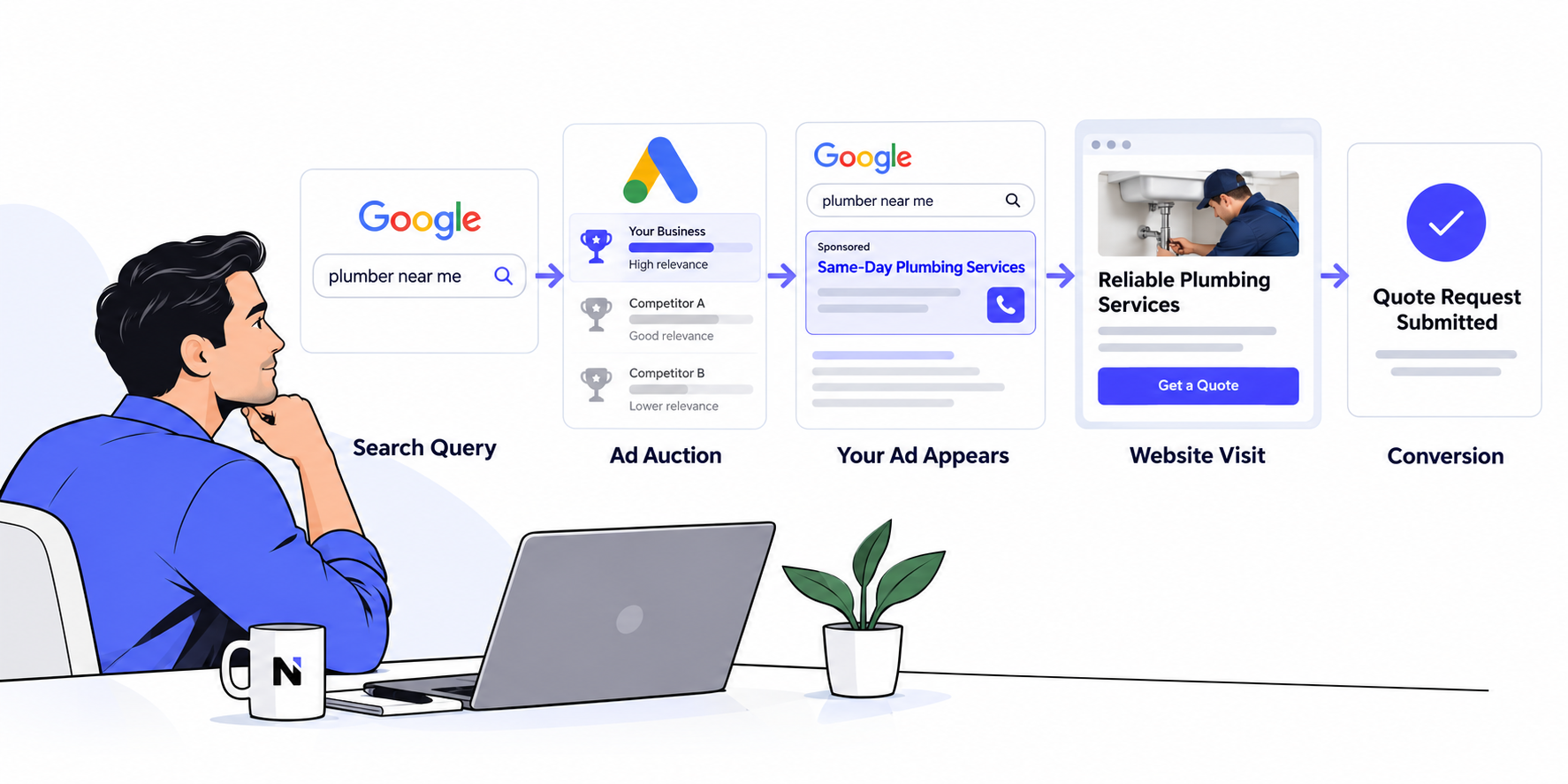
When a traditional company posts a job, sourcing alone takes weeks. Then screening. Then scheduling. Remote staffing agencies have already done the first three or four steps. Their candidate pool is pre-vetted, available, and ready to start. The process looks completely different:
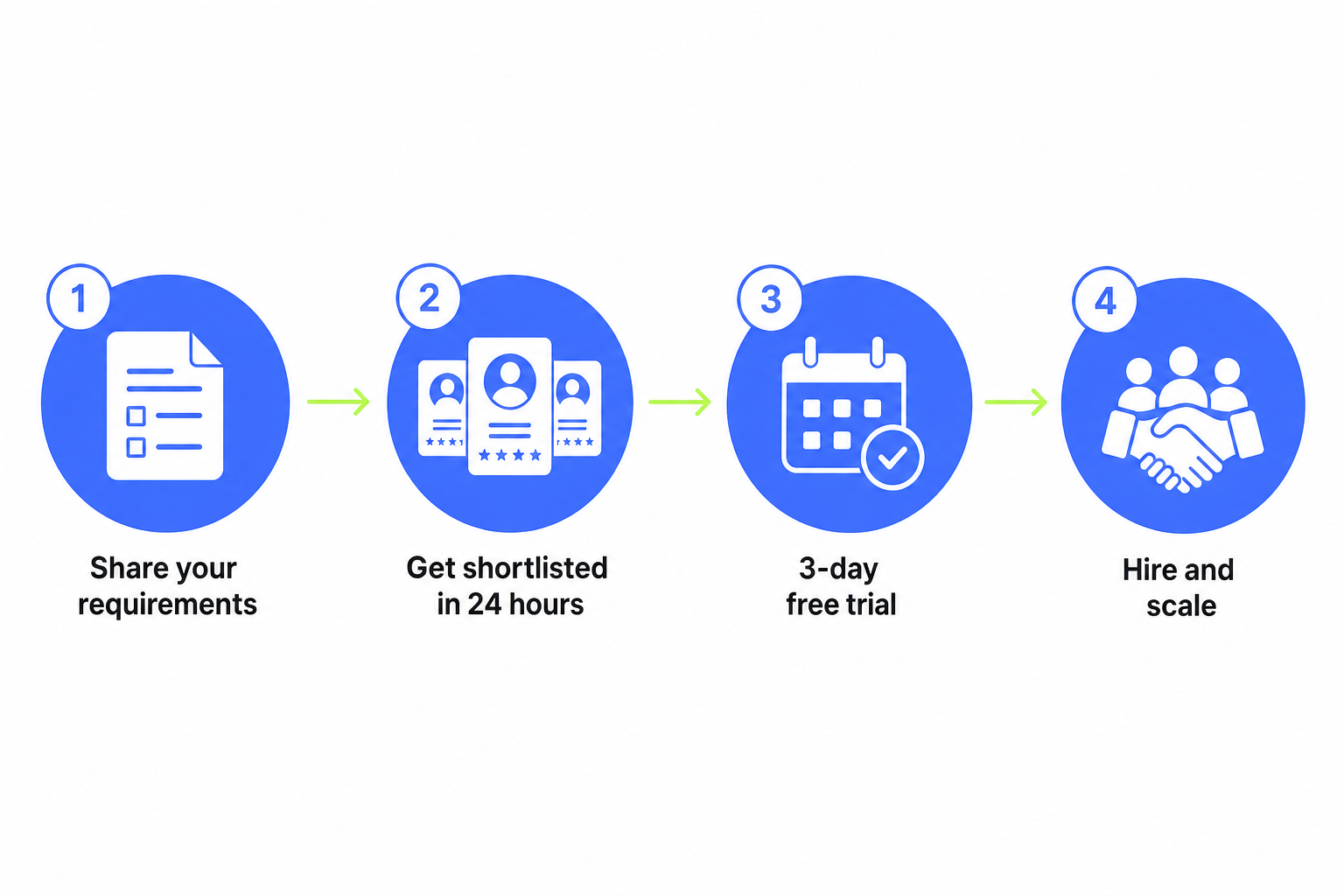
Take Next Hire Inc as a concrete example. Their process is:
- You share what you need – role, skills, hours, tools
- They shortlist candidates within 24 hours
- You start a 3-day free trial
- You hire and scale
That entire cycle takes less time than it typically takes a traditional company to finish screening resumes.
“We needed an MVP built quickly without sacrificing quality. NextHire matched us with a developer who understood startup urgency and helped us launch on schedule. The 3-day trial gave us confidence, and the onboarding process was refreshingly simple.”
- Priya Lawson, Startup Founder, Australia (nexthireinc.com/testimonials)
This kind of turnaround is possible because the agency has already done the hard work. They’re not starting from scratch when you submit a request – they’re matching against an existing, managed talent pool.
The cost picture
Speed matters, but it’s not the only reason companies use remote work staffing agencies. The cost comparison is often just as compelling.
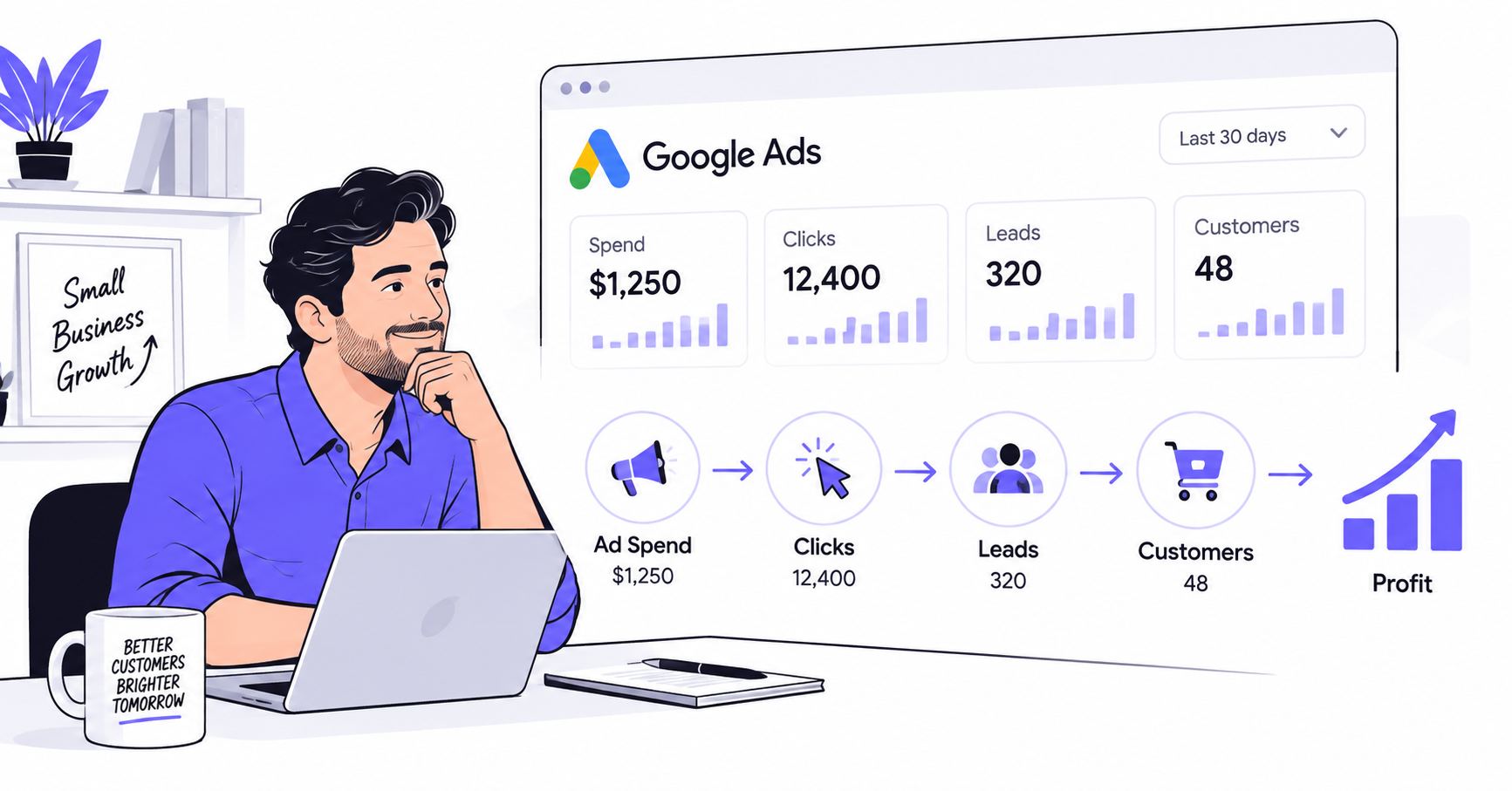
Consider what a company in the USA would typically pay for a full-time SEO specialist: $3,000+ per month, not including benefits, payroll taxes, equipment, or office overhead. A dedicated remote SEO specialist through an agency like Next Hire starts at $799/month. A web developer running $20–$50/hour locally costs from $5/hour through a remote staffing agency.
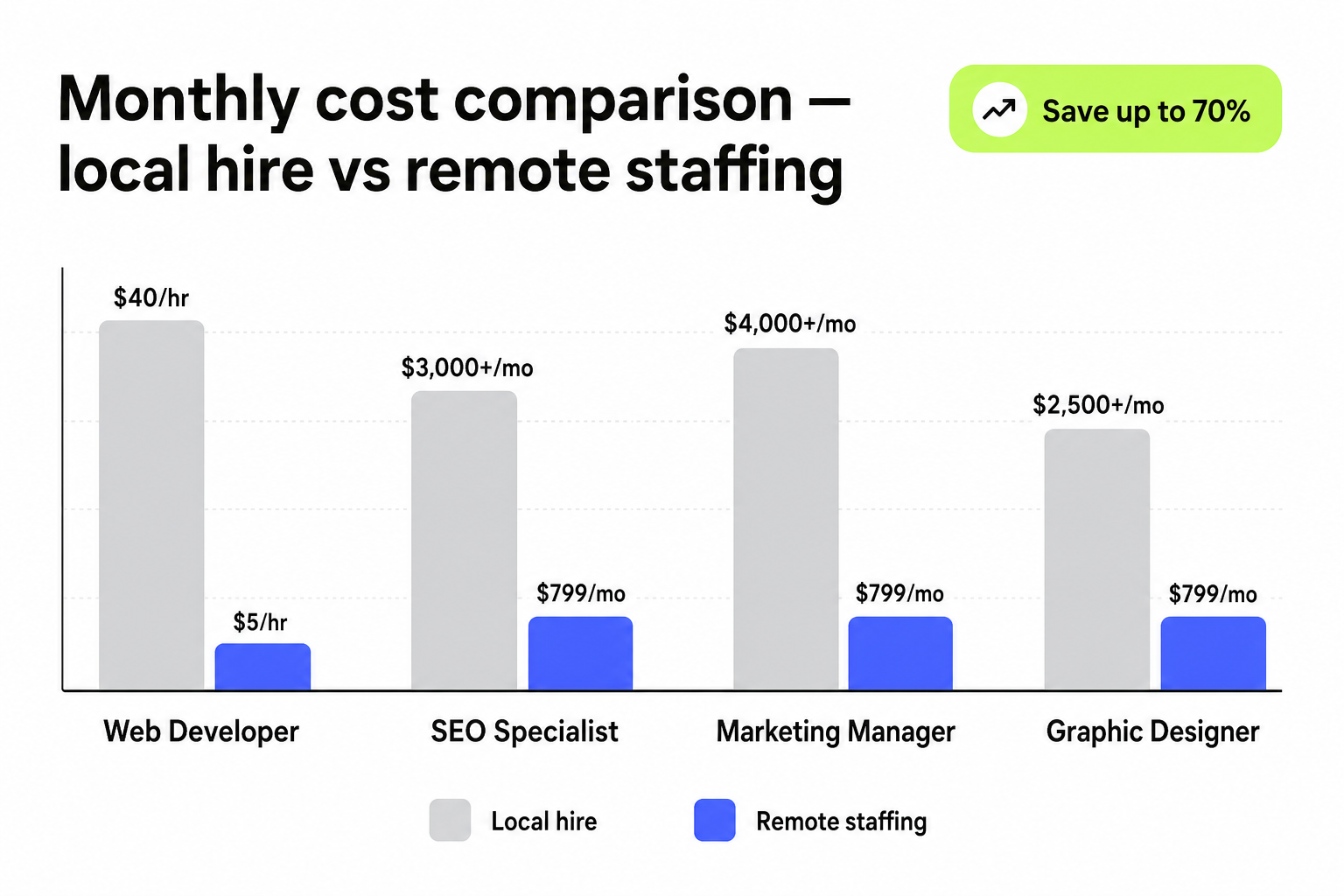
The savings come from two sources. First, you’re hiring from markets where skilled professionals earn less – not because the work is lower quality, but because the cost of living is different. Second, you’re eliminating the overhead: no recruitment fees, no job board costs, no HR time spent screening, no onboarding management on your end.
| Role | Local hiring (average) | Remote staffing agency |
| Web Developer | $20–$50/hr | From $5/hr |
| SEO Specialist | $3,000+/month | From $799/month |
| Marketing Manager | $4,000+/month | From $799/month |
| Graphic Designer | $2,500+/month | From $799/month |
Source: nexthireinc.com/pricing
This isn’t meant to suggest quality doesn’t matter. It does. The reason agency-sourced remote professionals can be hired at these rates without sacrificing quality is largely structural – the agency bears the cost of vetting, training, and managing the talent pool, so you’re paying for an output rather than funding an entire HR and recruiting apparatus.
What kinds of roles actually work well with a remote staffing agency
One misconception worth clearing up: remote staffing agencies aren’t just for virtual assistants and data entry work. The range of roles available through agencies like Next Hire spans most of the digital stack:
- Web development: frontend, backend, full-stack, mobile app developers, CMS specialists
- Design: UI/UX designers, animation and multimedia
- Marketing: digital marketing, SEO specialists, content writers
- Technical: QA and testing, AI and automation specialists, IT support
- Operations: accounting and business support
The roles that work best tend to have a few things in common: clear deliverables, communication that can happen asynchronously or in overlapping hours across time zones, and skill sets that don’t require physical presence. That covers most digital roles.
“We brought in a full-stack developer through NextHire for a fast-moving SaaS project, and the experience was excellent from day one. Communication was clear, delivery was consistent, and their team adapted quickly to our sprint process. It felt like adding a strong in-house contributor.”
- Daniel Hughes, Product Manager, Canada (nexthireinc.com/testimonials)
The roles that can be trickier are ones that require deep cultural context, real-time client-facing interaction, or specialized local knowledge – things like enterprise sales, localized community management, or roles where physical presence at a specific location matters. Those are worth thinking through carefully before going remote.
How a remote staffing agency differs from just hiring a freelancer
This is probably the question that comes up most often, and the answer matters.
A freelancer on a platform like Upwork is an independent contractor. They set their own hours, take multiple clients, and are accountable primarily to themselves. Communication gaps, missed deadlines, and disappearing acts are real risks – not because freelancers are unreliable by nature, but because there’s no management layer between you and them.
A remote staffing agency operates differently. The professionals they place are usually in-house employees of the agency, managed by the agency, and backed by a support structure that includes account managers, quality audits, and backup talent. When something goes wrong – and occasionally it will – there’s someone on the agency side responsible for making it right.
Next Hire’s approach illustrates this clearly: all professionals work from their Rajkot, India headquarters, managed by a coordination team in Las Vegas. If a placed professional doesn’t work out, they replace them immediately at no extra cost. Daily progress is tracked using time-tracking and productivity tools. Clients get a dedicated account manager.
That’s a fundamentally different relationship than hiring a freelancer for a project and hoping it sticks.
What to look for when choosing a remote work staffing agency
Not all agencies are equal, and some are better suited to certain types of companies than others. A few things worth evaluating:
Vetting process. How does the agency screen candidates before they reach you? The best agencies do skills assessments, background checks, and communication evaluations – not just resume reviews. Ask for specifics on what their vetting looks like for the role you need.
Trial period. A trial period before you commit tells you a lot about how confident the agency is in their talent. No trial = they’re less certain about quality. A free trial, like Next Hire’s 3-day option, is a meaningful signal that they’re willing to put their talent to the test before charging you.
Replacement policy. Mismatches happen. What’s the process when a hire isn’t working? The answer should be: fast replacement, no extra cost. If an agency doesn’t have a clear answer here, that’s worth noting.
Time-zone and communication fit. Can the person actually work overlapping hours with your team? Does the agency have infrastructure to support communication across time zones? Ask to understand what tools they work in and how they handle day-to-day updates.
Pricing transparency. Clear, published pricing is a good signal. Agencies that require you to jump on a call before sharing any numbers often have pricing that varies based on how hard they can negotiate with you – not ideal.
“Our internal team needed backend support for API integrations and database cleanup. NextHire gave us someone who was technically solid and very organized. What impressed me most was how smoothly they fit into our existing workflow without requiring constant oversight.”
- Markus Weber, Operations Manager, Germany (nexthireinc.com/testimonials)
When a remote staffing agency genuinely makes sense
There’s a version of this conversation where someone tries to talk you into remote staffing for everything. That’s not accurate, and it’s not useful.
A remote work staffing agency tends to be the right call when:
- You need to fill a role in days, not months
- You have a clear deliverable and clear tools (the person can start working without weeks of context-building)
- You’re trying to extend your team without extending your overhead
- You’ve had bad luck with traditional hiring – slow, expensive, or mismatched candidates
- You’re a startup or growing company that needs to hire at a pace that outstrips what internal HR can manage
It’s less ideal when the role requires deep institutional knowledge that takes months to develop, constant real-time collaboration across very different time zones, or a level of trust-building that’s only possible face-to-face. Those situations exist. Most digital roles aren’t them.
For companies in the USA, UK, Australia, and Canada hiring across web development, design, marketing, and content – a remote staffing agency with a structured in-house talent model is almost always faster, cheaper, and more reliable than trying to find the same person through traditional channels.
Try Next Hire Inc
Next Hire Inc is a remote work staffing agency built specifically to solve the speed and cost problem. With 10+ years of experience and in-house professionals across 20+ digital roles, they cover everything from frontend development and UI/UX design to digital marketing, content writing, QA testing, and AI automation. Pricing starts at $5/hour or $799/month, with a 3-day free trial and a no-cost replacement policy if the fit isn’t right. Candidates are shortlisted within 24 hours, and most engagements start within 48. If you’re looking to move faster than traditional hiring allows, start your free trial here.
Frequently Asked Questions
What does a remote work staffing agency actually do?
A remote work staffing agency connects businesses with pre-vetted remote professionals – developers, designers, SEO specialists, marketers, and more – handling the sourcing, screening, and onboarding so you don’t have to. Unlike freelance platforms, a staffing agency provides managed talent with ongoing accountability and support.
How fast can a remote staffing agency fill a position?
Most remote staffing agencies can shortlist candidates within 24 hours and get someone started within 24–48 hours after that. This compares to a national average of 63–68 days through traditional hiring channels as of early 2026.
Is a remote staffing agency cheaper than hiring locally?
Significantly. A virtual staffing agency like Next Hire offers roles starting at $5/hour or $799/month. Compare that to a local SEO specialist averaging $3,000+/month or a marketing manager at $4,000+/month. Most businesses save up to 70% on hiring costs.
What if the remote hire isn’t a good fit?
Most reputable agencies offer a free trial period and a no-cost replacement policy. Next Hire Inc, for example, provides a 3-day free trial and replaces any professional who isn’t the right match at no extra charge – meaning zero risk for the first hire.
What types of roles can I hire through a remote work staffing agency?
The range is wider than most people expect. Beyond virtual assistants, you can hire frontend and backend developers, UI/UX designers, digital marketers, content writers, QA testers, AI and automation specialists, and even accounting and bookkeeping support.